|
léelo en español >
Sergio Cervetti left his native Uruguay in 1962 to study composition in the United States.
In 1966 he attracted international attention when he won the chamber music prize at the Caracas,
Venezuela Music Festival. He was subsequently invited to be composer-in-residence in Berlin,
Germany in 1969-70 after studying with Ernst Krenek and graduating from Peabody Conservatory.
From 1972 to 1997 and 2007-08, Cervetti was Master Teacher of Music at Tisch School of the Arts at
New York University. During this time he composed over 100 works for the concert stage, dance,
theater and film, many of them commissioned, recorded and performed in venues and festivals in the
U.S. and abroad.
Cervetti's works range from the acoustic to the electronic, and deftly blend folk elements, European
tradition and minimalist aesthetics. After an early brush with twelve-tone and minimalism, imbuing
minimalism with melody, for example, in early works such as Guitar Music (the bottom of the
iceberg), Madrigal III and …from the earth…, his current approach is free and flexible. As much of a
traditionalist as an innovator, he continues to straddle musical worlds with new works that showcase
a post-modern synthesis of techniques from diverse periods as well as his rich South American
heritage.
Sergio Cervetti is a Uruguayan-born American composer. He was born in Dolores on November 9, 1940 to an Italian father who played the clarinet and to a French mother who encouraged piano lessons at an early age. During his teens he played piano and saxophone in a tango-jazz band while earning diplomas in French and piano. He taught French at the Alliance Française and by then had composed his first work, a song for soprano and piano based on poetry by Arthur Rimbaud.
After moving to Montevideo in 1959, he studied piano with Hugo Balzo and José María Martino Rodas, and harmony and counterpoint with Carlos Estrada and Guido Santorsola at the National Conservatory. Encouraged and aided by the Uruguayan diplomat and music critic Washington Roldán, and his brother Horacio Roldán, Cervetti emigrated to Washington, D.C. in 1962, and was sworn a United States citizen in Brooklyn, New York in 1979.
Cervetti graduated from Peabody Conservatory in Baltimore in 1967 after studying composition with Ernst Krenek and Stefan Grové, conducting with Laszlo Halasz, and having received scholarships from both Peabody and the Organization of American States. While still a student, he won the III Caracas Venezuela Festival chamber music prize in 1966 for Five Episodes for piano, violin and cello which was also favorably reviewed in Melos by the respected German music critic H. H. Stuckenschmidt as "A host of original ideas, an exemplary piece of music."
Following graduation from Peabody, during a time that witnessed national civil unrest, Zinctum (1967) fortunately saw its premiere on June 24, 1968 given by the Beaux-Arts String Quartet. Immediately after this work's performance that summer evening during the first part of a program at the Library of Congress' Coolidge Auditorium, the remaining works were cut short and the concert was hastily cancelled due to nearby riots in the nation's capital.
In December 1968 Cervetti was enroute to West Berlin at the invitation of the Deutscher Akademischer Austauschdienst Kunstler program (DAAD) to be composer-in-residence during 1969-70. Berlin at that time was still divided into the East and West by the infamous wall and surrounded by Communist East Germany. There he had the opportunity to meet composers such as Luigi Dallapiccola, Gyorgy Lygeti, Paul Méfano, Krystof Penderecki, Bernd Alois Zimmermann, and painters Alexis Akrithakis and Jorge Castillo. While writing works for performance such as Pulsar for brass sextet and Lux Lucet which won a Gaudeamus Choral Prize in Holland in 1969, he also co-founded the Berlin Dance Ensemble with the choreographer and dancer Kenneth Rinker which debuted on June 22, 1969 at the Akademie der Künste's Gastspiele Tanz und Ballett with Prisons, a collaboration with sets by Akrithakis, that stunned the audience.
On return to Washington, D.C. and after soon taking permanent residence in New York City in May 1970, he taught at Brooklyn College and Pratt Institute, was accompanist for many dance teachers and choreographers including Mary Anthony, Ethel Butler, Dr. Dorothy Madden, Bertram Ross and Anna Sokolow, did archival work for Virgil Thomson, and studied electronic music with Vladimir Ussachevsky and Alcides Lanza at the Columbia-Princeton Electronic Studio. This seminal period in his career, during the electronic pioneer days of manual cut-and-splice reel-to-reel tape, initiated an on-going interest in creating synthesizer-driven, computer-generated music. He was also a member of the Composers/Performers Group founded by Alcides Lanza, and actively composed and performed in the New York downtown scene of the 1970's and on tours with works such as Cocktail Party, Oulom, and Alberti Bass-Alberti Bounce. Some of these works were graphic scores, for example Graffiti and Orbitas, that led to Cervetti's participation in the Symposium and Exhibition of Music Notation directed by Friedrich Cerha in Rome, Italy in 1972.
The 1970 orchestral work Plexus, a semi-graphic score, was commissioned by the Pan American Union/Organization of American States and dedicated to its music director, Guillermo Espinosa, for the Fifth Inter-American Music Festival. It premiered in Washington, D.C. on May 18, 1971 with Antonio Tauriello conducting the National Symphony Orchestra and was covered by Newsweek Magazine (5/31/71).
"In the final premiere, 29-year-old Uruguayan Sergio Cervetti's Plexus, the musicians murmured and hissed, breaking at the end into quotations of such slogans as 'Pan Am Makes the Going Great' and 'Geritol for Iron-Poor Blood.' Some of the composers might indeed have preferred computers. One such was Uruguay's Cervetti, whose work had been commissioned for orchestra by the OAS. 'All composers know the difficulty of writing for unwilling musicians' he said, adding that he believes the training of musicians will have to be changed to meet the demands of new music."
Several examples of Cervetti's unorthodox scores, along with other composers of contemporary classical music using new techniques and notational devices, are illustrated in Gardner Read's Compendium of Modern Instrumental Techniques. (Greenwood Press, 1993.)
In 1972 Cervetti joined the faculty of New York University's Tisch School of the Arts where he taught until 1997, and returned in 2007-08. During his tenure as Master Teacher of Music he helped to establish the curriculum of composition and history, choreography, and set up the Theater Program's electronic sound studio. For over twenty-five years he served as mentor to his students, faculty (Stuart Hodes, Deborah Jowitt, Rachel Lampert, Lawrence Rhodes, Linda Tarnay among others) in the manner of an updated Louis Horst.
During this time he composed well over 100 acoustic and electronic works for the concert stage, dance, theater and film that were performed in venues and festivals in the United States and abroad. He continues to straddle musical worlds with new works that are a post-modern synthesis of European tradition, folklore, minimalism, and techniques from diverse periods. Many often reflect his South American heritage as well as literature, painting, and socio-political concerns.
Cervetti's intimate association and extensive collaboration with the dance world, as "a composer favored by many experimental dancers" observed Anna Kisselgoff in The New York Times (12/3/83), includes dozens of commissioned dance scores written for numerous choreographers and dance companies—notably 40 Second/42nd Variations, In Closed Time and Wind Devil which was awarded a Bessie in 1983-84 at the First Annual New York Dance and Performance Awards—and were presented by Dance Theater Workshop, Jacob's Pillow, La Mama, the Joyce, Ballet Hispanico, Sundance, Kennedy Center, Walker Arts Center, Lincoln Center, Akademie der Künste, Holland Festival and three Next Wave Festivals at the Brooklyn Academy of Music. WIND DEVIL & CO./DancElectronics, the Navona CD NV 5930, showcases seven of these works. This CD's Enhanced Content, when played via the computer, lists the choreographers and dance companies with whom he had the privilege to collaborate.
Video documentation of his music for dance and choreographic collaborations, predominantly electroacoustic works, is archived at the New York Public Library's Dance Collection/Dance Theater Workshop Permanent Archives; the BAM/Next Wave Video Archive for Contemporary Performing Arts; and the Lawrence and Lee Theatre Research Institute of Ohio State University as part of Rinker-Cervetti Dance & Music, Inc./Kenneth Rinker Dance Company.
Cervetti and Rinker collaborated on over thirty music and dance works since 1966 beginning with Six Sequences for Dance and including 40 Second/42nd Variations; co-founded the Berlin Dance Ensemble in West Berlin, Germany in 1969; and incorporated Rinker-Cervetti Dance & Music, Inc. in New York City in 1979, the foundation which supported their collaborative work up until 1988 and the ballet Rebel Angels commissioned by the Hartford Ballet Company.
Among Cervetti's important early minimalist works are Guitar Music (the bottom of the iceberg), Madrigal III and …from the earth… The latter was conceived as a controlled improvisation for sustaining instruments that borrows five notes from Gustav Mahler's Das Lied Von Der Erde. The piece marked a stylistic shift from Cervetti's 12-tone discipline and aleatoric sound exploration. Recently he fully notated …from the earth… and re-mastered the historic audio and video premiere performance, recorded at the Kitchen in New York in 1975, for a new Navona CD NV5958 of chamber music released in 2014, UNBRIDLED. This fourth Navona Records' all-Cervetti album adds further documentation to his important contributions to the minimalist movement as noted by New Music USA when the previous Navona CD NV5872, NAZCA, was reviewed in 2012 by Frank J. Oteri who concluded his overview of Cervetti's work by adding:
"When a full assessment of the breadth and depth of the minimalist movement in music is made one day, hopefully Cervetti's important contributions will not be overlooked. Now that there is finally some adequate documentation of his music we can be hopeful."
In 1977 Cervetti attended the Primer Festival Latinoamericano de Música Contemporánea de la Ciudad Maracaibo in Venezuela for a performance of Bits & Pieces & Moving Parts scored for chamber ensemble and electronics, and to accept the prize awarded for Concerto for Trumpet and Strings.
On the occasion of Ernst Krenek's 85th birthday celebration at the University of California, San Diego, Cervetti was honored to contribute a work dedicated to his illustrious mentor who was born in 1900 and passed in 1991. Madrigal IV for soprano and chamber ensemble was chosen to open the program of works by fellow composers and former pupils performed on December 7, 1985 as part of A Festschrift Concert for Ernst Krenek.
The Hay Wain is an electroacoustic symphonic poem inspired by the Hieronymus Bosch triptych and was released on a Periodic Music CD in 1987 along with Transatlantic Light. It established his reputation as a composer of electronic music. It is "noteworthy in a sea of fluff that passes for electronic music these days" wrote Mark Sullivan in Option Magazine, May/June 1988, No.20. Selections from The Hay Wain are used in Oliver Stone's 1994 film Natural Born Killers.
For WNYC Radio's 50th Anniversary Concert in 1994 at Alice Tully Hall, produced and hosted by John Schaeffer, Cervetti was among composers Milton Babbitt, John Corigliano, and Philip Glass who were commissioned to set John Ashbery's poem No Longer Very Clear. Cervetti arranged it for soprano, harpsichord and string quartet performed by Cheryl Marshall, Christopher Oldfather, and the Essex String Quartet.
His vocal music's emotional depth is also on display in two song cycles for soprano and piano, and one for soprano and orchestra.
-
Four Fragments of Isadora (1979) is based on letters exchanged between Gordon Craig and Isadora Duncan. It was commissioned by Stuart Hodes for Elizabeth Hodes who premiered the work at NYU's University Theatre, New York City on June 2, 1979.
-
El Triunfo de la Muerte (The Triumph of Death) (1993) is to poetry by Circe Maia and premiered July 30, 1993 in New York at the Museum of Modern Art's Summergarden concert with Cheryl Marshall soprano and Joel Sachs leading a Julliard School ensemble
-
Leyenda is a neo-nationalistic tone poem for soprano and orchestra set to fragments from the Uruguayan epic, Tabaré, by Juan Zorrilla San Martín which centers around a Spanish mother's love for her mixed-blood child. It premiered in Montevideo's historic Teatro Solís in 1994 by Julia Clara Usher and the Orquesta Filarmónica of Montevideo conducted by Federico García Vigil.
Rhythmically intricate is Candombe for Orchestra first performed by the Moravian Philharmonic in the Czech Republic in 1997 conducted by Jiri Mikula. It is the 1996 orchestration of Candombe for Harpsichord (1984) which María Teresa Chenlo premiered in 1985 at The Prado Museum in Madrid. Both works pay homage to a national dance of African origins from his native Uruguay which is also recognized by UNESCO as intangible cultural heritage.
Neo-nationalistic works, such as Leyenda, both Candombes, Las Indias Olvidadas, El Río de los Pájaros Pintados, Ofrenda para Guyunusa, Exiles, Tres Estudios Australes, and to some extent Nazca, have borders that are rooted in a country's particular history, indigenous culture and legends which may not be common knowledge. However, as these works belong to the universal language of music that trumps nationality, satisfaction comes with the arousal of curiosity and exploration on many levels.
Cervetti witnessed the premature passing of several of his talented NYU students during the early days of the AIDS epidemic. One response came as a work in four epitaphs for violin and viola composed for his students who died young. Sunset at Noon (1995) was premiered by Israel Chorberg, violin, and Harold Coletta, viola, on June 27, 1996 at the Landon Gallery in New York City. The Music Connoisseur (Vol.4, No.3, Fall 1996) wrote:
"The Cervetti work stood head and shoulders above all else–life-affirming, muscular and alive, a 'rage against the dying of the light' fine-tuned and heightened to a kind of Olympian protest. The choice of violin and viola struck me (Marlene Harding) as a metaphor for the teacher-student relationship."
Elegy For A Prince, his first opera and completed in 2005, was premiered on May 12, 2007 in three excerpted scenes by New York City Opera/VOX 2007. Brian Garman conducted City Opera's orchestra and a cast of singers including Julianne Borg, Scott Hogsed, Wayne Hobbs, Malia Bendi Merad, Jeffrey Tucker, and Eric Jordan. It is freely adapted from Oscar Wilde's The Happy Prince with a libretto by Elizabeth Esris. Cervetti has loved the story since reading it as a boy. The opera is a sophisticated fairy tale for all ages whose principal characters, the Prince and Swallow, champion compassion and beauty in a cynical world. Its premiere was featured on the PBS39 program Tempo.
In 2011 a Symphonic Suite from Elegy For A Prince was scored in five movements that delivers the opera's musical flesh and dramatic bones. The Suite triumphantly draws to a bittersweet close, as does the opera, with the two characters from the final scene, the Little Match Girl (soprano) and Young Writer (tenor) who echoes Oscar Wilde's words from De Profundis,"If the world is built of sorrow, it was built with hands of love."
YUM!, a one-act chamber opera about two, competitive friends verbally sparing to bake a birthday cake for a mutual friend, is a culinary comedy from 2008, and the second Cervetti-Esris collaboration.
Some Realms I Owned, inspired by Elizabeth Bishop's poem, One Art and the line The art of losing isn't hard to master, is a work for piano in three movements. It was commissioned in 2010 by the Allen Wilkinson Greer family in memory of wife and mother Nancy Carroll Greer. The first public performance was eloquently given by Chiharu Naruse at the PARMA Music Festival in Portsmouth, New Hampshire on August 14, 2014. The work could be considered a companion piece to Seven Farewells to Paradise, also for piano which was later commissioned in honor of Allen Wilkinson Greer. Its genesis is John Milton's Paradise Lost and drawings by Gustave Doré which illustrate that epic poem, and can be heard on the Navona CD NV5900 Keyboard3 with Cervetti at the keyboard.
Nazca, composed in 2010, is Cervetti's first work for string orchestra. Five movements depict several of the enigmatic geoglyphs discovered in Peru's Atacama desert in the1920's which are recognizable only by soaring above them. Cervetti captures the hummingbird, monkey, spider, hands and a figure thought to be extraterrestrial in a dazzlingly performance given by the Moravian Philharmonic String Orchestra conducted by Petr Vronsky on Navona Records' CD NAZCA.
Martha's Vineyard saw the premiere preview on April 8, 2011 of Valerie Sonnenthal's film of 27,000 still photographs, Visual Diary Project, which is set to electronic soundtracks titled Visual Diary. A kaleidoscopic section is on YouTube. Visual Diary along with the miasmic soundscape The Mouth of Boredom, which is an evocation from the first of Charles Baudelaire's collection of poems Les Fleurs du Mal, showcase Cervetti's signature style and mastery of electronic work on a CD of these two works released in 2009. Critics rightly commented that his electronic music, such as these fourteen tracks, "beat synthesizers at their own game."
For two consecutive tours, September 2011 and January 2012, Cervetti was invited by the Spanish Ministry of Culture to be Professor of Musical Analysis with the Joven Orquesta Nacional de España (JONDE), National Youth Orchestra of Spain. Four works were programmed, recorded and broadcast over Radio Clásica España. Leyenda and Las Indias Olvidadas (The Forgotten Indies for harpsichord and 11 instruments) toured, among other towns, Alicante's 27th Festival of Music where the work premiered in 1992. It was then praised by Carlos Villasol in RITMO (11/92, No. 637) as "an impressive and seductive work full of light and exuberance." This four movement concerto joins the ranks of 20th century literature for the harpsichord among works composed by Manuel de Falla, Bohuslav Martinu, and Francis Poulenc.
JONDE's players were conducted by Jordi Bernàcer with María Teresa Chenlo at the harpsichord and soprano Magdalena Llamas on the first tour. Alejandro Posada conducted Candombe for Orchestra while Cervetti took the podium to conduct the improvisatory chamber work …de la tierra… (…from the earth…) during the second tour. In Listen to the Young, Federico Solano in Alicante's Informacion.es summed it up:
"The [Alicante Festival] program was entertaining. Works by Sergio Cervetti, a composer who has the healthy intention to do what he wants when he wants it, in the noblest sense, occupied the first half of the program with two works of opposite character [Leyenda and Las Indias Olvidadas] as if they were from two composers. Brilliant!"
JONDE's artistic director, José Luis Turina, commented that their goal in conjunction with Fundación BBVA is to "record a collection of Spanish and Latin American composers, in this case a CD dedicated to Sergio Cervetti" with works that celebrate and lament past events from South America's history as they are linked to Spain. During both tours all four works were recorded.
Cervetti's discography of cross-cultural, contemporary American classical music grows with offerings of previously unrecorded works. In 2009 PARMA Recordings, on their premier classical label Navona Records, released Destinations, Orchestral Works from Latin American Composers. It features Chacona para el Martirio de Atahualpa, the second movement from Las Indias Olvidadas.
In early 2011 following Crossover, the radio interview with Jill Pasternak that aired on Philadelphia's WRTI-FM, PARMA Recordings produced superb recordings of Leyenda, Madrigal III, Lux Lucet in Tenebris, In Principio Erat Verbum and Nazca performed by the Moravian Philharmonic Orchestra, Kuhn Choir, and soloists such as soprano Alena Hellerova and harpsichordist Monika Knoblochova conducted by Vit Micka and Petr Vronsky. PARMA and their talented team is led by CEO Bob Lord who was singled out by Musical America ("The Influencers", 12.1.15) as one of the most influential people on today's music scene.
In Principio Erat Verbum is an organ prelude in a minimalist-baroque style that quotes one of the most melodic and dramatic moments from Elegy For A Prince. Lux Lucet in Tenebris for a cappella chorus, written in memory of Cervetti's mother in 2002 and titled after the Waldensian Church motto, was recorded in Prague by the exquisite Kuhn Choir conducted by Marek Vorlicek. It is featured on the Navona album NV5939, Foundations, released in January 2014.
2012 saw the release of the Navona CD NAZCA. It is the first recording to exclusively feature Cervetti's vocal and instrumental music. Four works span thirty-five years, 1975-2010. "This is unique, inspiring music written with originality and expertly crafted" wrote the United Kingdom's online New Classics (2/17/15).
- Leyenda (1992) for soprano and orchestra.
- Chacona para el Martirio de Atahualpa (1991) for harpsichord and chamber ensemble.
- Nazca (2010) for string orchestra in five movements.
- Madrigal III (1975) for two sopranos and chamber ensemble set to 15th century Aztec verses is a foray into heterophony that seems to fuse medieval counterpoint with minimalism. At its 1976 premiere Robert Burmister described it as "A work of singular beauty…consciously or not seemed to be a direct linear descendant of the Italian baroque school of string concerto writing perfected by Vivaldi and Corelli." (San Mateo Times, California, 2/26/76)
In Uruguay during 2012, La Escena Vocal presented a scene from Elegy For A Prince while Ofrenda para Guyunusa for harpsichord was premiered in Montevideo by María Teresa Chenlo. Guyunusa was a Charrúa Indian woman who was captured in Uruguay in the early 19th century, and fated to be exhibited in a Paris circus. The harpsichord's crystalline sound evokes the look of a music box figurine who, in stark contrast, is the victim of cruel fate because she is so exotic.
In early 2013 the Navona CD NV5900, Keyboard3, was released with six keyboard works. Two for piano, three for harpsichord, and one for organ are described as a "…a self-portrait that can be startling and yet evinces a spanning of vast musical spaces. This is nothing lightweight; it is quite substantial in brilliance and craft. A good one!" (Grego Appelgate Edwards, Classical-Modern Music Review, 7.2.13).
- Tres Estudios Australes is dynamically played by pianist Karolina Rojahn.
- Seven Farewells to Paradise has Cervetti at the keyboard.
- Alberada, Hard Rock and Candombe are splendidly interpreted by harpsichordist María Teresa Chenlo.
- In Principio Erat Verbum for organ is played by Karel Martinek on the renowned 1745 Michael Engler organ in Olomouc's St. Maurice Church in the Czech Republic.
Autumn 2013 saw the release of WIND DEVIL & Co./DancElectronics and was previewed in August 2013 at the PARMA Music Festival in Portsmouth, New Hampshire. It is an unsurpassed collection of electroacoustic music created for seven dances from 1979 to 1990, and an aural snapshot of Cervetti's active participation in the dance world of New York City during the transitional era of cross-pollination of diverse dance techniques, styles and disciplines. The web's babysue posted online that "Cervetti is a master at his craft, combining elements from dance, classical, and electronic music into one cohesive whole. Killer compositions include Wind Devil, Cantata #84, Out of the Rolling Ocean, and Requiem." Another track, In Closed Time, is a panorama of sound created in 1985 and a masterpiece of electronic music.
Cervetti finished a wave of new works in 2014.
- Two for harpsichord, What's in a Name?and Sunday Boogie for harpsichord four-hands.
- Three Oscar Wilde fairy tales prompted The Remarquable Rocket for clarinet and piano.
- Intergalactic Tango for piano was written for Nicolas Horvath and his marathon concert in Paris on April 11, 2014 which he repeated in variation at Carnegie Hall on January 9, 2015.
- Three Pieces for Marimba (Marimbadrone, Marimbamor, Marimbamia) were composed with Juan Alamo in mind after meeting and hearing this virtuoso play the marimba with panache.
- Tres Tristes Tigres (Three Sad Tigers) for marimba, piano and cajón, is a Spanish language tongue-twister whose title hints at how technically demanding the music is.
- The title of I Can't Breathe for piano and electronics is the plea that Eric Garner uttered before his death while being subdued by police in Staten Island, New York in July 2014, and was composed in his memory.
- Chimère is written for piano. Chimera in Greek mythology is represented as a fabulous, fire-breathing monster having a lion's head, a goat's body, and a serpent's tail; and is also meant to represent an impossible or fiendish task.
The XVIII Festival Latinoamericano de Música in Caracas, Venezuela invited Cervetti to participate with performances of his work in May and October 2014 which included the premiere of the string quartet, Unbridled, and a performance of Candombe for Orchestra that concluded the festival. A prize awarded at this festival back in 1966 helped Cervetti gain international attention. Superb performances by both the Cuarteto de Cuerdas Teresa Carreño and Orquesta Sinfónica de Juventudes Francisco de Miranda conducted by Felipe Izcaray can be seen on YouTube.
Navona Records' album NV5958 UNBRIDLED which features four chamber works that span forty-one years including an early minimalist work from 1972 was released in 2014.
- The title track, Unbridled for string quartet written in 2013, is a discourse on the calamity caused by financial institutions who were fiddling with America's purse strings that heralded a repeat of the Great Depression.
- Plegaria y Danza for violin, 1994, is dedicated to the memory of a friend and the wife of the violinist, Israel Chorberg, who passionately plays this prayer and dance on his Stradivarius.
- Mémoires du Paradis for piano trio from 2012 is a musical figment that uniquely renders five of Salvador Dali's scenes distilling John Milton's Paradise Lost, and collectively suggests what constitutes paradise is mankind's practice and experience of the arts which are civilization's deeds to Eden and Earth's reminders of Paradise.
- The improvisatory …from the earth… was conceived in 1972 for any number of sustaining instruments with which an ensemble melodically expands five notes borrowed from Gustav Mahler's Das Lied von der Erde. This CD features the historic 1975 video of the premiere, programmed Music Within the Music at the Kitchen, conducted by Cervetti who also plays the electric organ.
Videos, such as the complete 1975 performance of …from the earth… on UNBRIDLED, and an interview with Cervetti on NAZCA, are an outstanding feature of Navona Records' compact discs when played on the computer. They also offer printable scores, photos and extensive biographical and background notes on the artists and works featured on the albums.
Spain's preeminent music magazine, RITMO, published an interview with Cervetti in the July/August 2014 issue (No. 876) and reviewed UNBRIDLED in October 2014 (No. 878). In part the English translation of the latter reads:
"Sergio Cervetti is a markedly independent composer. Almost an 'outsider'…capable of straddling apparently distant musical worlds that range from the most formal serialism to repetitive music without disdaining a healthy influence of folklore. Four works make an exceptional calling card for those who do not know him…transporting us to other musical worlds of distinct originality and poetry. A boundless creator. Nevertheless also challenging. No listener will remain indifferent. Highly recommended."
In October 2014, after having graduated from Peabody Conservatory back in 1967, Cervetti was pleased to meet with Jennifer Ottervik, Peabody's head librarian and archivist, in Baltimore to donate nearly sixty works to his alma mater, primarily scores but also audiovisual material. These works are available at The Arthur Friedheim Library and Archives at The Peabody Institute of The Johns Hopkins University.
2015 was a year of new compositions and recordings, various performances in the U.S. and abroad, and several in-depth radio programs.
The new CD TRANSITS-Minimal to Mayhem was released on May 12th. This fifth Navona Records' all-Cervetti album is an abridged sequence of five works from a set time and concrete place that maps Cervetti's creative progression over four decades of composing from 1975 to 2013.
- Concertino for piano, woodwinds and timpani from 2013 is a rowdy, raucous, three-movement array of South American rhythms tempered by a tender quote from Gustav Mahler's Kindertotenlieder. Commanding the piano is Karolina Rojahn accompanied by Boston area musicians conducted by Geoffrey McDonald.
- Exiles (1980), one of Cervetti's last minimalist works, was created on the Synclavier and begins with a slow piano rendition of the tune from a Uruguayan patriotic song, Mi Bandera (My Flag), which is soon overwhelmed by electronic textures.
- In contrast what follows is Guitar Music (the bottom of the iceberg), an early minimalist work for solo guitar from 1975 and a nuanced tour-de-force with a soupçon of flamenco by virtue of the instrument's ancestry, and played with riveting intensity by Stuart Fox. This piece was one of Cervetti's experiments in "restricted pitch-classes" as noted when first released on vinyl in 1977 (Composers Recordings Inc., CRI 359).
The two works that complete TRANSITS-Minimal to Mayhem are based on the history and culture of the Río de la Plata where Cervetti was born and raised.
- El Río de los Pájaros Pintados (1979) seamlessly integrates the bandoneón, played by the master René Marino Rivero, with electronics. Its title is the Spanish translation of the native Guarani Indian word "Uru-Guay" meaning "The River of the Painted Birds."
- Candombe for Orchestra (1996) has Jiri Mikula conducting the Moravian Philharmonic Orchestra.
The following is what critics had to say about these works on TRANSITS-Minimal to Mayhem.
"These are very worthwhile works, performed in the main quite well, but in any case some high points in Cervetti's compositional oeuvre over the past 40 years, give or take. They stand out with distinction and show us his essential qualities as melodist and colorist, his rhythmic vitality and harmonically modern sophistication. I was taken by this anthology and will certainly come back to it to savor the originality and lively pointedness of Cervetti at his best. I recommend you hear it too."
- Grego Applegate Edwards from the online Gapplegate Classsical-Modern Music Review, June 5, 2015.
"Never has the combination of North American minimalism infused with South American influences functioned so marvelously as in the Concertino for piano, woodwinds and timpani on this CD released by Navona; these South American folk influences have always been at the center of Sergio Cervetti's music. With piano and saxophone in the foreground, it pulls the rest of the orchestra in winding pathways and thunderous landings. It is followed by three older works dating back to the late seventies. Exiles opens with the piano playing a patriotic Uruguayan theme that suddenly leaves the soundscape to a comforting tapestry of floating electronic sounds. This also dominates El Río de los Pájaros Pintados this time accompanying and merging with the sound of the bandoneon. Guitar Music is perhaps the most minimal of this series of pieces, everything played in the guitaristic phrasing continues pressing until the end, rarely deviating from the direct route that was mapped out. Candombe from 1996 closed the CD where the composer elaborates the syncopated rhythms of a Uruguayan dance in a driving and sparkling orchestral crescendo: an exclamation point to a CD that is rich, colorful and intense."
- KATHODIK, July 6, 2015, Filippo Focosi.
In Spain last December 2015 Las Indias Olvidadas - The Forgotten Indies was released on the NIBIUS CD label. Exuberant performances by the National Youth Orchestra of Spain (JONDE) with soloists María Teresa Chenlo, Magdalena Llamas, and conductors Jordi Bernàcer and Alejandro Posada were recorded during Cervetti's two tours with JONDE in 2011-12 as previously noted. Las Indias Olvidadas for Harpsichord and 11 Instruments, Candombe for Orchestra, Candombe for Harpsichord, Leyenda, and …de la tierra… makeup the disc's recital.
This JONDE/NIBIUS CD, engineered by José Miguel Martínez and produced by JONDE's Artistic Director, José Luis Turina de Santos, affords today's listener of contemporary music a rare opportunity to hear other interpretations of Cervetti's works. Leyenda and Candombe for Orchestra, for example, can be heard performed by other interpreters on Navona CD's, NAZCA and TRANSITS: Minimal to Mayhem respectively. A new rendition of …de la tierra… conducted by Cervetti on the NIBIUS CD differs from the 1975 live-recording and premiere of …from the earth… on Navona's CD UNBRIDLED which features the ensemble in a controlled-improvisation. There is also a third electronic version played by Cervetti on the Kurzweil synthesizer available on the CD The Triumph of Death.
The premiere of The Remarquable Rocket written in 2013 for B-flat clarinet and piano was given on May 3rd by Federico Palacios, clarinet, and Celia Schmitt, piano in Sarre-Union, France. Among other 2015 performances were Intergalactic Tango played by Nicolas Horvath in Carneige Hall on January 9th; Guitar Music (the bottom of the iceberg) performed by Colin McAllister in Colorado (2/4/15) and at the University of Alaska/Fairbanks' New Music Festival on February 7th; and Pronto se irá el invierno from The Triumph of Death was sung by Lucia Leite with Andrea Cruz Fostik at the piano on May 28th in Montevideo at a Teatro Solís concert sponsored by Mujeres en Música Filial Uruguay.
Marvin Rosen, who is the unquestioned champion of new music on the airwaves bar none, interviewed Cervetti on August 5th during his two-hour program "Classical Discoveries" which airs on Princeton NJ's radio station WPRB.fm. WFMT in Chicago broadcast "The Music of Sergio Cervetti" on the program "FIESTA" hosted by Elbio Barilari on December 26th. He pointed out that Cervetti began to freely compose in both acoustic and electronic mediums in view of a rigid avant-garde during the late sixties and early seventies.
During the course of 2015 Cervetti composed several new works.
- O Mort, vieux Capitaine, a poem from Les Fleurs du Mal by Baudelaire, gave the impetus to compose a Piano Quintet for string quartet and piano. Bach's last chorale, Vor deinen Thron, is woven into the third and final movement titled with Baudelaire's line au fond de l'inconnu pour trouver du nouveau.
- Two solo piano pieces, Scylla and Charibdis, join the 2014 work, Chimère, as a trilogy. Scylla and Charibdis were immortal monsters who beset the narrow waters traversed by the hero, Odysseus, during his wanderings described in Homer's Odyssey.
- Cervetti re-orchestrated and transcribed to FINALE the Concerto for Trumpet and Strings originally composed in 1974 that also won a prize at the 1977 Maracaibo Festival.
- The Red Circle for piano refers to Siddhartha Gautama, the Buddha, who drew a circle with a piece of red chalk and said: “When men, even unknowingly, are to meet one day, whatever may befall each, whatever the diverging paths, on the said day they will inevitably come together in the red circle.”
- Las Puertas for piano and viola is in seven fiendish, little sections that are inspired by the puzzling "H" blocks and stones of chiseled precision unearthed at Bolivia's archaeological site, Puma Punku.
- The clarinet quintet with the title, And The Huddled Masses, not only evokes the classic image of 19th century immigrants being greeted by the Statue of Liberty's silent promise of hope for a brighter future, but also today's migrants and refugees fleeing their war-torn homelands. The third and final movement is dedicated to twelve-year old Noemí Alvarez Quillay who, in 2014, committed suicide after being arrested at the border in her attempt to join her parents who were illegal aliens from Ecuador already living in the United States. Mozart's canon, Ach, zu kurz ist unsers Leben Lauf, is appropriately quoted in this movement of remembrance about the brevity of life and how suddenly it can be extinguished.
The highlight among 2016 projects included a trip in April to Havana, Cuba sponsored by PARMA Recordings as part of a cultural exchange, and to record the clarinet quintet And the Huddled Masses. It is significant that this so-titled Quintet was recorded at a moment in U.S.-Cuban history when borders are opening up following restoration of diplomatic relations in 2014 after a long period of acrimonious isolation. The work is a testimonial for today's unwelcome migrants and refugees who are often confronted by closed borders with tragic consequences in their pursuit of a dream of freedom in other lands. And the Huddled Masses was released in 2016 on PARMA Recordings' new label Ansonica Records, INTERSECTIONS, Cross-Cultural Collaborations in Sound.
“The clarinet quintet, And the Huddled Masses (2015), has a special resonance today…Somehow the music (of three movements I. The Tired, the Poor, and the Huddled Masses; II. Haves, deguenilles; III. Noemi Alvarez Quillay) seems to move beautifully through this sense of anxiety to a final moment of hope at a new life” writes Cinemusical, 2/27/17.
Recording sessions during 2016 also took place in the Czech Republic, Philadelphia, and Boston. Among performances were the premieres of the two devilish piano pieces, Scylla and Charibdis, performed by Charles Abramovic at Temple University in Philadelphia in October; and Three Pieces for Marimba (Marimbamia!, Marimbamor, Marimbadrone) given by Juan Alamo in Virginia, Brazil and Spain. His commanding performance is featured on Albany Records' Pursuing Freedom released in 2016.
SUNSET AT NOON – Six Works In Memory Of was released in February 2017. Six diverse works composed between 1995 and 2015 remember the untimely passing of individuals who lost their lives to terminal illness, or were the victims of mankind's indifference, prejudice and neglect.
Gapplegate Classical-Modern Review (2/6/17) describes them as written by “an individual modern American composer of character…sobering, pointedly life-critical tone poetry expressions that question loss and commemorate the victims and their suffering.”
- Some Realms I Owned is performed by the composer at the piano.
- And the Huddled Masses is in company with the album's shared theme of reflection yet celebration in the shadow of lives passed.
- Ofrenda para Guyunusa is skillfully interpreted by harpsichordist María Teresa Chenlo.
- Sunset at Noon, a neo-romantic-minimalistic glimpse of young students lost to AIDS in the early days of the epidemic, is expressively played by Vit Muzik, violin and Dominika Muzikova, viola.
- I Can't Breathe for piano and percussion is dedicated to a victim of police brutality which is “rhythmic, shatteringly brittle modernism” says Gapplegate Classical-Modern Review (2/6/17).
- Lux Lucet In Tenebris exquisitely sung by the Kuhn Choir conducted by Marek Vorlicek comes as a sacred benediction to close this memorial program of secular works. “It is simply put, gorgeous, and wraps up this disc very well” praises Cinemusical, 2/27/17.
Ready for release in May 2017 is Navona Records' PASSAGE, Contemporary Works for Orchestra which opens with the award-winning (Maracaibo, Venezuela Festival 1977) Concerto for Trumpet, Strings and Timpani given a tumultuous performance by Ondřej Jurčeka on trumpet with the Moravian Philharmonic Orchestra conducted by Petr Vronsky.
Cervetti regards the work subtitled Septem Tubae as an aria for trumpet which holds sovereign sway over the strings and timpani. In mind was “And the seventh angel sounded the trumpet” from the Book of Revelation, chapter XI, verse 15. Passages about the Apocalypse made a frightening impression on Cervetti as a youngster when his French grandfather read them to him. Those images blazed again, while composing years later, when he envisioned a vast canvas with streaks of vibrant hues. Three sections unfold in a faceted continuum. The first, introduced by a menacing trumpet solo, is foreboding and violent. The second is a tumultuous interplay between the timpani and trumpet. The final section recalls the Voices of Heaven in the violas and celli, later in company with the timpani and trumpet which leads to an apocalyptic crescendo.
This minimalist-leaning Concerto composed in 1973 also opens and sets the tone for the album TRIPTYCH REVELATION in which Cervetti navigates distant musical worlds from acoustic to electronic. Release is June 2017. Three compelling works (Concerto for Trumpet, Strings and Timpani, Piano Quintet-Toward the Abyss, The Hay Wain) reveal the range, sound palette and periods from his body of work from over four decades, and display evolutionary exploration, synthesis, techniques, and skills tailored to suit curiosity and fulfill creative ideas. He treats a shared apocalyptic theme drawn from the New Testament as noted, 19th century French literature, and Flemish art of the 16th century; in addition to German Baroque music and technological advancements in electronic music since his work at the Columbia-Princeton Electronic Studio in New York City during the 1970's. A gallery of works depicts three renditions of what has been foretold since the beginning of time: Mankind's day of reckoning will come.
Piano Quintet-Toward the Abyss is a masterful 2015 work rendered from Charles Baudelaire's (1821-1867) transcendent poetry that reverently culminates in a glimpse of J. S. Bach (1685-1750). The key lines are from the seventh poem Le Voyage. Dive into the abyss…so as to discover something new in the depths of the unknown…Hell or Heaven, what does it matter?
The Piano Quintet seamlessly advances through the mysterious bewildering first movement, into the wistful second, and on to the third movement when a brief quote from Vor deinem Thron tret ich hiermit appears. This last chorale by Bach, Before thy Throne I now appear written as he contemplated mortality, foreshadows the Quintet's evanescent conclusion. After a shimmering hesitation it consummates in a meditative sequence of ascending lines given first to the violins then followed by the piano as though a flame extinguished and fused with eternity. The way in which the final movement draws to a close was impacted by the anticipated death of the composer's sister.
The prism through which Le Voyage is heard without words possibly translates as a treadmill of dreams. Life flashes by to cease at the moment of passage from light to dark. Ushered by the Creator's resplendence, reality also passes into history shed for an inevitable voyage. This post-minimalist work of mature dexterity, following nearly 150 works composed over four decades, epitomizes the salient aesthetic means such as scattered 12-tone rows, minimalism, glimmers of melody, and music's iconic legacy by which the Quintet's synthesis of suspense in tone and material was fashioned. It is given a spot-on performance by Karolina Rojahn, piano; Omar Chen Guey, violin I; Rohan Gregory, violin II; Peter Sulski, viola; Jacques Lee Wood, cello; conducted by John Page.
In contrast to these chamber works, The Hay Wain is an electroacoustic tone poem from 1987 inspired by Hieronymus Bosch's haunting and grotesque imagery of human folly and perdition that await Judgement Day. The triptych painted by Bosch and its fantastic images inspired this electronic work, and established Cervetti's reputation as a major composer of this medium when it was first released by Periodic Music in 1987.
Cervetti mines Bosch's terroir of universal representations of world forms using a virtual orchestra and a battery of sampled sounds redolent of Bosch's brush. They are hammers of fate that depict Mankind's blind, mad progression among the false delights of life on earth, hastening in ecstasy and torment from the Garden of Eden into Hell. Cervetti comments that “Nothing short of that cataclysmic assessment could be more appropriate for Bosch's artistic observation of 16th century life in his Haywain that parallels the lunacy of these troubling times of the early 21st Century.”
Four movements target details in Bosch's narrative panels. - I. Fall of the Rebel Angels in the upper left panel is depicted as insects falling to earth like confetti.
- II. The Lovers sit in bliss, in the central panel, on top of the wagon mounded by hay singing and playing the lute oblivious of the abyss towards which they are being driven. Their guardian angel prays on one side. On the other the devil intrudes his music by blowing his nose into an extended horn.
- III. Demons Construct the Tower, in the right panel, shows dwellings being constructed by sinners built from the stones of damned souls. Characterized by the kingfisher, this is a tower of human pride.
- IV. The Procession, in the central panel, passes by a wagon laden with hay drawn by semi-human, semi-animal monsters followed by a cavalcade of ecclesiastical and lay dignitaries. It underscores the Flemish proverb “The world is a pile of hay and everyone takes whatever he can grab.”
It is worth noting that during Cervetti's first visit to Madrid in 1967, in order to attend the European premiere of Five Episodes for Piano Trio, he became fascinated by Bosch's mystical paintings at the Prado Museum. The Haywain soon became a favorite. Inspired by the universality of this triptych he then decided to write music celebrating it. His first rendition on the subject was composed in 1967, The Hay Wagon, Six Fragments of Hieronymus Bosch for full orchestra and speaking chorus. Twenty years later he decided to revisit The Haywain and mine its wealth of bizarre and often comic imagery, and give Bosch's fantastic subject another try by utilizing the electronic medium. Technology by 1987 had become fairly sophisticated beyond the primitive days of manual cut and splice. MIDI and sampling were readily available, and several MIDI-fitted synthesizers allowed to create and program what was called at the time a “Virtual Orchestra.”
Among 2017 performances were …from the earth… performed by the Vermont Philharmonic conducted by Louis Kosma in March, and in August the Uruguayan premiere of Candombe for Orchestra in Montevideo given by the OSSODRE Orchestra conducted by Roberto Tibiriçá. Nicholas Horvath, pianist, repeated his concert tour with Intergalactic Tango in the Netherlands in September, and José Ignacio Fernández Bardesio played Guitar Music (bottom of the iceberg) in Montevideo in October.
After recently becoming acquainted with the Aghori doctrines of India that maintain all opposites are ultimately illusory, it renewed Cervetti's fond interest in Indian music. In 1971-72 he composed a series of Ragas for trombone and electronic tape performed by James Fulkerson in the U.S. and abroad. Today he returns to that coupled form to create a piece for electronic sounds and clarinet. Aghori Mantra is slated for a premiere and was recorded in France by clarinetist Federico Palacios.
In June 2108 Cervetti traveled to the Czech Republic in order to record three 21st century works for orchestra. Sessions were for a Navona album release in 2019 by PARMA Recordings. Bob Lord, who is a proponent of music in all styles, says the bench marks of Cervetti's work are not only minimalistic and Latin American but also romantic and baroque. The Moravian Philharmonic Orchestra under the baton of Petr Vronsky recorded Plexus,, Consolamentum, and Et in Arcadia Ego.
Plexus, a semi-graphic score commissioned in 1970 for the National Symphony Orchestra and revised in 2016, refers to a branching network of vessels, nerves or systems, and becomes evident with an accumulating counterpoint of similar lines that expand into fractal, dissonant textures. The original score included popular radio and TV slogans from the 1970's spoken by orchestra members. These dated sound-bites, such as “Pan Am makes the going great” and “Geritol for iron poor blood”, are replaced by a reverse plexus where textures progressively thin to end pianissimo.
Consolamentum composed in 2016 is titled after the sacrament of the medieval Christian Cathars during confirmation in the faith and upon impending death so as to unite the believer with the Holy Spirit and elevate to a blessed plane. It is a musical offering for the Cathars, Albigensians, and Waldensians who suffered persecution under the Inquisition, and is dedicated to the composer's mother who was Waldensian. It is constructed around two chords, the equivalence of the tonic-dominant relationship, with counterpoint that is peppered with dissonances and running scales which culminate in a quasi-tonal ending. The work elicits a belief in regeneration and mankind's potential for elevation to a spiritual plane derived from, but not dependent upon, a religious rite.
Et in Arcadia ego is a symphonic poem from 2017 dedicated to the island Martín García, a nature preserve off the coast of Uruguay. A painting by Nicolas Poussin (1594-1665) in the Louvre, The Shepherds of Arcadia, depicts a paysage similar to what Cervetti remembers as a boy when visiting the island. It bears an inscription, Et in Arcadia ego, generally interpreted to be a meditation on mortality; in this paradisiacal land death is ever present. The work is a remembrance of childhood euphoria now lost; along with the island that was once Uruguay's but is now under Argentina's jurisdiction. A continuous variation on two notes, the idée fixe of shifting pitches B and B-flat, which are almost constant and give a pseudo-impression of tonality, an unusual doubling of instruments, divisi strings, clusters, the minimalistic imitation of avian cacophony, and a criollo tune near the end are manipulated to summon a canvas of sound which yields a masterwork for orchestra.
Among performances during 2018 was Intergalactic Tango, a take-off on a classic South American dance with a twist, which was brilliantly played by pianist Charles Abramovic at Temple University/Boyer School of Music in Philadelphia on September 23, 2018. This showpiece is a piano rendition composed in 2014 after an electronic score created in 1980 for choreographer Kenneth Rinker for Cantata #84, behind the moon, beyond the rain.
Global Music Awards named Parallel Realms-XXI Century Works for Orchestra a Gold Medal Winner in August 2019. This eighth Navona CD of Cervetti’s music was produced by PARMA Recordings and released on March 8, 2019. It features three symphonic works mentioned above–Et in Arcadia Ego, Consolamentum, Plexus–performed by the Moravian Philharmonic Orchestra under the baton of conductor Petr Vronsky.
Gramophone Magazine reviewed Parallel Realms in the August 2019 issue:
Cervetti has a vivid orchestral imagination and the knack of getting his ideas and their developments down on paper...bringing all three works to life in finely shaped performances...purely and compellingly orchestral. Very good sound.
–Guy Rickards
Quotes from five other reviews about Parallel Realms which unanimously sum up the three works:
Midwest Record Review, February 25, 2019
"A solid sonic explorer, his three works on display here are the kind of works that play to tradition and the future at the same time."
Records International, April 2019
"A powerfully expressive programmatic idiom drawing on the three last styles (sonorist, aleatoric, minimalistic) and with a good deal of approachable tonal-sounding harmony about it."
Cinemusical, April 10, 2019
"His music explores the sorts of aesthetic and creative shifts of the latter 20th Century from serialism to minimalism. One feels as if music itself is being stretched outward until we must contemplate where we are headed in the resulting silence. The canvases are large and the music shifts between these aleatoric and minimalist realms as both consonance and dissonance are used to serve the dramatic imagery or concepts of the music."
Gapplegate Classical-Modern Music Review, Grego Applegate Edwards, April 21, 2019
_Sergio Cervetti writes orchestral music in the “Grand Tradition”of Modernist Drama, an heir to the great High Modernists that insisted that the old make way for the sometimes radically new, he builds his very own edgy sonic castles in the air."
The Whole Note, Andrew Scott, April 26, 2019
"Clearly this is modern music…recommended for fans of symphonc music who hope to be challenged in their listening and satisfied in their quest for exciting and beautiful new music."
At MorningStar Studios in East Norriton, Pennsylania on June 14, 2019 it was a double triumph to hear a superb soprano, Cara Latham, and outstanding pianist, Charles Abramovic, record Four Fragments of Isadora, a song cycle for soprano and piano about the life of iconic dancer Isadora Duncan (1877-1927). The text is based on fragments selected from the letters exchanged between Isadora Duncan and her lover Gordon Craig, Isadora’s diaries, and her autobiography My Life. By so doing the song cycle became a demonstration of identity through variety in order to gain insight into the depths of Isadora's life: Desire, Illness, Death of the Children, Farewell.
The work was commissioned in 1979 by Stuart Hodes who was a leading dancer in the Martha Graham Dance Company and, at the time, chair of New York University’s Dance Department at Tisch School of the Arts where Cervetti taught music. Elizabeth Hodes, his wife, premiered the work at University Theatre in New York City in June 1979
Not only was Four Fragments of Isadora recorded in June 2019 by Latham and Abramovic for future release, but they also reprised their ravishing performance before a live audience in Rock Hall at Temple University/Boyer College of Music in Philadelphia on September 15, 2019.
In July 2019 Franco González Bertolino, a violist in Italy, performed sections from Sunset at Noon for violin and viola composed in 1996 in response to the AIDS crisis. In Rome during October 2019 Bertolino started rehearsals with a group of handicapped musicians to prepare performances and videos of …from the earth…. This minimalist controlled improvisation from 1972, which is based on 5 notes from Gustav Mahler’s Das Lied von der Erde, freely lends itself to individual interpretation and group interaction. However by March 2020 the schedule was disrupted due to the coronavirus pandemic and the lockdown throughout Italy.
On the subject of the opera Elegy For A Prince and its journey from genesis to score and on to Carnegie Hall on February 16, 2020.
“If the world is built of sorrow, it was built with hands of love.”
To quote these final lines from the opera–which are Oscar Wilde’s words from De Profundis–suggests that the world endures tragedy and sorrow but it triumphs due to love and our shared humanity. This is a theme in Elegy For A Prince which echoes Cervetti’s life work. The opera was composed in 2005 to an original libretto by Elizabeth Esris adapted from Oscar Wilde’s fairy tale, The Happy Prince. It was premiered in 2007 in several concert scenes (Act I Prelude, scene 1, Fugato, and Act II scenes 1 and 9) by New York City Opera at VOX 2007 Showcase of American Composers.
In the spring of 2019 it was a welcome surprise to exchange letters with the Honorable U.S. Supreme Court Justice Ruth Bader Ginsburg who is a fan of opera and happens to be the subject of one in Scalia/Ginsburg by Derrick Wang. She graciously accepted the promotional CD of Elegy For A Prince and commented that this fairy tale by Oscar Wilde, The Happy Prince, is one of her and her children’s favorite stories, and added that “your music fits it so well.” Years earlier, by coincidence on March 3, 2001, Cervetti who respected her privacy and the "notorious RBG" were seated next to each other at a matinee performance of Manon at the Metropolitan Opera. In her letter, she perfectly recalled that Ruth Ann Swenson sang the title role and Julius Rudel conducted. By further coincidence, Julius Rudel had also conducted Cervetti in 1966 when he was a student at Peabody Conservatory and sang in the chorus of Jeanne d'Arc au bûcher by Arthur Honegger.
On Sunday evening, February 16, 2020 in Carnegie Hall’s Stern Auditorium, Distinguished Concerts International of New York (DCINY) presented Perpetual Light with a concert performance of Act II, scenes1 and 9 from Elegy For A Prince. Four characters from the opera were represented. Megan Weston (soprano) as Swallow and Match-Girl, Quinn Bernegger (tenor) as the Young Writer, and Luis Alejandro Orozco (baritone) as the Prince were vocally and physically stunning and looked in character although dressed in concert attire. They were supported by an orchestra finely conducted by a last minute replacement, Michael Adelson, the Assistant Artistic Director of DCINY.
The Croatian-based conductor, Miran Vaupotić, who was initially scheduled to conduct Elegy For A Prince and works by Rain Worthington, Mark Mcencroe, and Arthur Gottschalk, was unable to be present due to visa issues. It was also a gross and unforgivable error in the Playbill program to have omitted Elizabeth Esris’ name as librettist and not to have recognized her as co-author of the opera with shared intellectual property.
PARMA Recordings posted a Blog Note on February 12, 2020 in advance of the Carnegie Hall Elegy For A Prince performance. The complete Note follows.
A shared love of Oscar Wilde’s fairy tale,“The Happy Prince”, was the genesis for Elegy for a Prince, an opera in two acts by composer, Sergio Cervetti and librettist, Elizabeth Esris. Both loved the tale as children— Cervetti in his native Uruguay and Esris in Philadelphia. When Sergio approached Bucks County, Pennsylvania poet and friend, Elizabeth, about a collaboration, they marveled at the similar impact “The Happy Prince” had made on their formative years. Each recalled being drawn to the whimsy in the relationship of the statue of the Prince and the Swallow, and at the same time touched by the compassion and humanity intrinsic to the tale.
Elegy for a Prince is adapted from “The Happy Prince” by Oscar Wilde (1854-1900). The original story is a fairy tale. In the opera, the main characters—Swallow and a statue of the Prince—are developed beyond the original tale to create a complex story that resonates with today’s reality. It asks the audience to take a leap of faith. There is clearly a glittering statue of the Prince on stage, but he is also a human figure who sees poverty and suffering from his position overlooking the town. Likewise, Swallow is seen at times as a bird, but he is sometimes seen as a young vagabond of exotic origins who is suspect in the eyes of the towns people because he is so different in dress and skin color.
Cervetti, as of 2005 who had composed over 150 works, had yet to create the one musical form that he loved, opera. Elizabeth, an English and creative writing teacher in the Central Bucks School District for twenty-three years, her poems having appeared in journals including Wild River Review, The Schuylkill Valley Journal, River Heron Review, and in France Revisited, where several of her travel articles appear, had never written a libretto. Nevertheless, the two worked for more than two years and developed Wilde’s story beyond the children’s tale, incorporating original character development and lines from Wilde’s, De Profundis.
It is to be noted that after completing Elegy for a Prince, Cervetti and Esris went on to collaborate on YUM!, a one act opera that plays upon motifs of wine, cooking, and friendship. Elizabeth also wrote the lyrics for Childhood, an aria from an unfinished work-in-progress that explores autism.
But along the way in adapting “The Happy Prince” they spent time in the Rare Book Room at New York Public Library exploring various editions of De Profundis and eventually corresponded with Merlin Holland, Oscar Wilde’s grandson, regarding their project and to ask his permission to use lines from De Profundis in the second act. He thanked them for not assuming that all Oscar Wilde’s work was in the public domain, read detail about their development of plot and character, assured them that lines from any edition up to 1949 could be quoted or paraphrased, and wished them well in their endeavor.
When asked to describe the music in Elegy for a Prince, Cervetti states that it is “neo-Romantic with flights of minimalism.” The opera is melodic throughout, but, for example, uses minimalism to create a sense of urgency as Swallow flies through the town to aid the poor. In addition, ever since studying at Peabody Conservatory with Stefan Grové and Ernst Krenek (1900-1991) a composer who at this period in his career was at the vanguard of total serialization, Cervetti has been engaged in the rigor of counterpoint to simultaneously express multiple ideas. These are present in the last few measures of the opera where three major themes converge bringing the final scene to its uplifting climax.
Both composer and librettist look forward to the day when a full production of Elegy for a Prince will be realized. The bittersweet, meaningful message of the opera's story takes on special significance in today's marginalized world. It is their hope that the DCINY concert at Carnegie Hall is an important step toward that dream. For now Elegy for a Prince joins the fabled list of Carnegie Hall’s works and performers from Judy Garland to Tchaikovsky who opened the Hall in 1891.
Today Cervetti might claim autonomy from his age (b.1940) because he is composing new works as never before. The benefit of longevity and his early, steadfast addiction to classical music no doubt played a role in an unexpected honor bestowed in September 2019. His hometown in Uruguay, Dolores, recognized him as an “Illustrious Citizen of Merit” due to his academic and professional achievements, and contributions to contemporary music.
Sinfónica, the Uruguayan magazine of music, opera, and dance in the May 2019 issue, published an interview. Six questions covered Cervetti’s discography and aspects of his career. Three highlights are translated from Spanish to English.
Q. Your activity as a composer is ample and diverse: works for orchestra, chamber music, piano, vocal and choral, opera, as well as a great amount of electroacoustic works and a combination of acoustic with electronics. I would like your reflection in respect to this matter. And what caused you to compose works in so many genres? Was it perhaps due to inspiration that came from crucial moments in your life?
A. Since Stefan Grové and Ernst Krenek accepted me as their student in 1963, I have lived only to compose. Krenek told me several times: “Don’t wait for inspiration, get to work and inspiration will come.” He was right. And this is what I have done for the past 45 years. All musical genres appeal to me, all those genres multiply my curiosity and inspiration.
Q. People identify composers by genre. How would you define yourself?
A. I was always attracted by the new and by experimentation. From tonality to electronics. But I am not an experimentalist. I am attracted to all aspects of musical expression except the super-easy writing that many interpreters prefer because they do not want to exert themselves studying challenging, new works. Some critics have qualified me as versatile, whereas many interpreters consider me difficult, although I do not think that way. It is simply that one cannot continue composing in an easy style when one must continue to open frontiers little by little while contemplating all options.
Q. I would ask you to give an analysis of contemporary classical music.
A. One would need a book to analyze contemporary music. Unfortunately, the world of new music is too contradictory and paradoxical. For many composers and critics, new music must be atonal or experimental, and they do not accept any other concept in this rigidity. It was similar to my early student days; to incorporate a perfect chord in a new work was as an anathema and it is true today, although these rules are being softened. Melody was also a de facto prohibition. There was only one composer in my student days who I admired enormously and that was Luigi Dallapiccola whom I had the great pleasure of meeting (in 1969) in Berlin and exchanged ideas when both of us were composers-in-residence in that city. In his beautiful work, Cinque Frammenti di Saffo (1942), Dallapiccola introduces in one of the fragments, a clear chord of E-flat major (what follows is purely dodecaphonic), and in the last fragment a beautiful melody for the soprano with the lyrics Io lungamente ho parlato in sogno con Afrodite. This work has certainly influenced me from my early days. For many decades much of contemporary music has neglected the listeners’ auditory enjoyment. Therefore, we have also lost the public. It is as though it were a great sin to give pleasure to audiences. I have tried to do this (to offer a pleasurable listening experience) with my new CD Parallel Realms, and I sincerely hope that you will all agree with me.
Fiesta is a classical music program devoted to Latin American and Iberian music from the 16th to 21st century heard on Chicago’s Classical radio station WFMT and hosted by Elbio Barilari. The program, Three Great Latin American Living Composers, was broadcast on November 14, 2020 which included the Uruguayan born Cervetti and his orchestral work, Consolamentum. Arturo Márquez from Mexico and Manuel Orrego Salas from Chile were also notably recognized.
In May 2020, Teresa Díaz de Cossio requested an interview with Cervetti regarding a DMA research project at the University of California/San Diego about his work during the early 1970’s at the Columbia-Princeton Electronic Music Center in New York City. In fact, an ongoing and substantial portion of Cervetti’s work is synthesizer-driven, computer-generated music starting in 1970 at the Columbia-Princeton Center for Electronic Music. His teachers were Alcides Lanza and Vladimir Ussachevsky. In the early days of electronic music, hundreds if not thousands of cuts & splices were needed to produce the recording of a single work. Cervetti eventually deviated from this laborious process by mixing, in real time, sound wave generators into a multi-track ½-inch tape recorder. This incipient period was before the Synclavier which had a keyboard and soon after became state-of-the-art. Oulom is his first electronically created work using sine, square, and sawtooth wave generators. Several early electronic tapes were subsequently played in tandem with acoustic instruments. Following Columbia-Princeton, he worked in the electronic sound studios at the University of Victoria in Canada, McGill University in Montreal, the sound studio he assembled in 1972 at Tisch/NYU, and his studios in Brooklyn, NY and Bucks County, PA.
The electroacoustic symphonic poem for virtual orchestra, The Hay Wain, created, engineered, and performed by Cervetti in 1987 was lauded by Mark Sullivan in OPTION Magazine, May/June 1988:
"With the dramatic character (and some of the sound) of an orchestral tone poem, it sounds composed rather than improvised, but without seeming stuffy. There is little obvious use of sequencing (despite the presence of composing software) and no drum machines, although there’s plenty of percussion of the tympani, bell, and other orchestral families…This is still a substantial recording, noteworthy in the sea of fluff that passes for electronic music these days."
An earlier review of a Cubiculo performance in New York City on October 18, 1971 appeared in Dance Magazine, December 1971. It was written by Doris Hering who was not yet prepared for new sounds produced in new ways:
"Kenneth Rinker made Feinting in which he and Barbara Dickinson shared a somnolent togetherness while trombonist Jim Fulkerson and an electronic tape (Raga II) made a godawful racket composed by Sergio Cervetti."
Anna Kisselgoff in The New York Times of February 15, 1976 reviewed the Greenhouse Dance Ensemble at Riverside Church Theater, New York, NY, and a performance on February 13, 1976. She wrote that Red Right Returning, "a work created last year and one that, despite its cruel viewpoint, was also the most dazzling piece on the program...to Sergio Cervetti’s effectively disturbing and whirring sound score."
The DMA research project at the University of California/San Diego regarding Cervetti’s works at the Columbia-Princeton Electronic Music Center in the 1970’s also resulted in the creation of a new CD in September 12, 2020, mastered by Glenn Barratt at Morningstar Studios in East Norriton, PA. SERGIO CERVETTI, ELECTRONIC WORKS – THE FIRST DECADE, 1970. It features the following works.
- Oulom (1970) Oulom is a Hebrew word meaning boundless and limitless time. Created and realized at Columbia-Princeton Electronic Music Center, New York, NY. Premiere March 27, 1971, Composers’ Forum, Donnell Library Auditorium, 20 W. 53 Street, New York, NY. Composers’ Forum Thirty-Fifth Anniversary, 1935-1970. Sponsored by the New York Public Library and Columbia University. Choreographer and dancer Kenneth Rinker.
- Studies in Silence - Sections I, II, III (1970-71) Created and realized at Columbia-Princeton Electronic Music Center, New York, NY. Studies in Silence is also the title of a non-electronic work from 1968 but the recording of this work is deteriorated and lost along with other tapes from the 1960’s and 1970’s.
- Recycle (1971) Created and realized at Columbia-Princeton Electronic Music Center, New York, NY. Premiere January 31, 1972, Composers/Performers Group, The Cubiculo, 414 W. 51 Street, New York, NY. Choreography Kenneth Rinker. Dancers Barbara Dickinson, Kenneth Rinker.
The Village Voice, February 10, 1972, review by Tom Johnson observed that "Cervetti’s Recycle came across well, with the help of choreographer Kenneth Rinker. It is a slow motion pas de deux with the dancers costumed as clowns, with large multi-colored paper wreaths around their necks. The movements are not particularly unusual, but the extremely slow motion, and the weird costumes, combined with the subtle shifting sounds of Cervetti’s electronic score, make a very grotesque and arresting image."
- Raga I (1971) Created and realized at Columbia-Princeton Electronic Music Center, New York, NY. Performance January 28, 1972, Redpath Hall, McGill University, Montreal, Canada.
In The Montreal Star, May 15, 1975, Dominique Clift’s review of Composers/Performers Group of Montreal and New York, Week of New Music at McGill University’s Pollack Center Hall noted that "The Composers/Performers Group was created by Alcides Lanza in New York in 1966 while he was a lecturer at the Columbia-Princeton Electronic Music Center. It has become Montreal-based since Lanza became director of the electronic music studio at McGill…Music is conceived as a spectacle or a show…Sergio Cervetti’s Raga I, as the title implies, is an amniotic sound bath."
- Red Right Returning (1975) Red Right Returning is a navigational term. Created and realized at Columbia-Princeton Electronic Music Center, New York, NY. Premiere December 18, 1975. Commissioned by Carol Conway Dance Company. American Theatre Laboratory/Dance Theater Workshop, 219 W.19 Street, New York, NY. Choreography Carol Conway. Dancers, Carol Conway, Brian Webb.
- Stella Dominatrix (1979) The work for 4-channel computer-generated tape was produced on the New England Digital Synthesizer (Synclavier). The composition is organized around a restricted number of pitches taken within the tempered and non-tempered scale. Without falling into the category of program music, the title meaning Ruling Star, makes allusion to the inevitability of Fate and the ultimate acceptance of it. Created and realized at University of Victoria Electronic Studio, Victoria, BC, Canada. Premiere February 7, 1979, Music Building Recital Hall, University of Victoria, B.C., Canada.
The El País, Montevideo, Uruguay, 1980 review by Elbio Rodriguez Barilari of Concierto del Nucleo Música Nueva in Teatro del Anglo, Montevideo, Uruguay stated that "Stella Dominatrix, by the Uruguayan living in the United States, Sergio Cervetti, constitutes an overwhelming experience in various senses. In the first place, it is technically perfect. Created in a fabulous electronic studio belonging to the University of Victoria (Canada), in the sound production as well as in the recording there are enough reasons to envy the immigrated composer."
MORTAL DREAMS-Four Vocal Works is the title of a new Navona CD with music from the inner universe of imagination from the unbridled to the sublime. This is the first and only album exclusively devoted to Cervetti’s vocal music and ranges from acoustic to electronic music composed from 1975 to 2019. It features distinct vocal settings taken from the transitory realm of dreams, hopes, desires, and secret fantasies. PARMA Recordings produced the album for release and distribution by Naxos on October 9, 2020.
- Four Fragments of Isadora (1979) is an operatic-like song cycle for soprano and piano based on letters written by and to the iconic dancer Isadora Duncan as previously described.
- Childhood for soprano and electronic sounds (2007) with lyrics by Elizabeth Esris is a devoted mother’s aria recognizing her child’s autism. She reveals how Abby’s childhood began like any other but evolved in unexpected ways.
- Madrigal III (1975) for two sopranos and chamber ensemble weaves the poetry on the brevity of life written by the 15th century Aztec ruler, Netzahualcoyotl.
- That Feeling of Power (2019) for modified voice and electronics as previously mentioned.
This sublime, extreme and all-embracing recording, MORTAL DREAMS, was reviewed in the January 2021 issue of Gramophone.
Sergio Cervetti (b1940) turned 80 last year (his birthday fell on November 9) and remains as active as ever, evident in the most recent work here, the wholly electronic That Feeling of Power (2019), which closes this new release, the 11th Navona has devoted to his music. With its modified vocal part – underpinned by a sampled, ominous drum riff – That Feeling of Power is a fine example of his ability to communicate directly with his audience, here decrying the abuse of power by the few for their own material benefit, against the common good. The transience of all material things (not least life) is explored in Madrigal III (1975), a terrifically vibrant cantata for two sopranos and chamber ensemble, where the singers’ entwined vocal lines overlay a euphonious, minimalist-style accompaniment reminiscent of Reich and Glass. It is my favourite work on the album, evocatively performed.
The Four Fragments of Isadora (1979) and Childhood (2007) both have more personal derivations; the one a 22-minute song-cycle based on extracts from the letters of the great American dancer Isadora Duncan, the other a short aria for voice and electronics describing the feelings of a mother whose child has been diagnosed with Asperger’s syndrome. The range of emotion in the Isadora Fragments is by some way the widest of any work here, with expressions of love, tenderness and the intensity of grief: this last, in the third song, ‘Death of the Children’ (two of Duncan’s children accidentally drowned with their nanny in 1913), is heart-rending, reminiscent of the composer’s outrage in I Can’t Breathe (2014 – a presciently titled work from an earlier incident where Black Lives Matter). Cara Latham is audibly stretched in places in the songs, but this only underlines their expressive power. The performances throughout are strong and Navona’s sound is very fine.
— Guy Rickards
Ever since the world-wide Covid-19 pandemic, as previously mentioned, which ruptured the routine of everyday life starting in February of 2020, live performances with audiences in attendance have been cancelled. The internet has come to the rescue in some regard for the performing arts, in certain cases, by virtual online performances that fill the void if not a concert hall seat. PARMA Recordings and the Moravian Philharmonic Orchestra produced the online performance of Sunset at Noon for violin and viola on May 13, 2020 broadcast from Reduta Hall in Olomouc, Czech Republic. This work, written in 1995 during another epidemic, the AIDS crisis, was previously recorded by Vit Muzik and Dominika Mužiková in 2016 for the album of the same title, SUNSET AT NOON, released on February 10, 2017. They reprised their performance of this work with panache and passion for a world-wide public.
Further postponements and rescheduling due to the coronavirus pandemic include the virtual concert premiere of Cervetti’s fifth string quartet, Silent Earth, sponsored by PARMA Recordings to be performed in May 2021 by the Axiom Quartet of Houston, Texas. The London Symphony Orchestra is slated to record Fanfare - Gated Angel in 2022. When restraints from the pandemic are lifted and it is safe for group activities, Franco González Bertolino will resume rehearsals in Rome of …from the earth… with his group of challenged musicians to prepare performances.
At this stressful and trying time which drags on with closures, quarantines and few live, public performances, it is a continued pleasure to listen to Marvin Rosen host his WPRB-fm/Princeton radio show, Classical Discoveries. He devotes playtime to a wealth of living, contemporary classical composers from around the globe, and during 2019-2020 aired Cervetti’s Sunset at Noon, Consolamentum, Candombe for Orchestra, I Can’t Breathe, In Memoriam George Floyd, and Childhood. Thumbs up and hats off to Marvin Rosen with gratitude and continued success!
Cervetti continues to compose new works that include:
The Maidens’ Vow for Soprano and Chamber Ensemble (2019)
Fanfare - Gated Angel for Orchestra (2019)
Silent Earth, String Quartet No. 5 (2019)
Four Mythological Etudes for Piano (2015-2020)
The Road to Bremen for Orchestra (2020)
String Quartet No. 3, Qui vicerit (1990, revised 2021)
String Quartet No. 6, Beyond the Moon, Behind the Rain (2021)
String Quartet No. 2, Le Diable á Quatre (1988 revised 2021)
Over the years Cervetti has served as a panelist or judge, among others, for the 2013 PARMA Student Composer Competition, Philadelphia Classical Guitar Society 2013 8th Annual Guitar Competition, Juventudes Musicales del Uruguay Primer Concurso Iberoamericano de Composición "Mtro. Héctor Tosar" 2013, Fulbright Commission 1995-96, BMI Student Composer Competition 1970-73, Meet the Composer, and Creative Artist Program 1971.
Cervetti's work has been supported by foundations, corporations, and institutions such as the American Composers Forum/Philadelphia Chapter, National Endowment for the Arts, New York State Council on the Arts, American Music Center, Meet the Composer, the Joyce-Mertz Gillmore Foundation, Jerome Foundation, Exxon Foundation, Mobil Foundation, Warren-Gorham-Lamont, Robert Sterling Clark Foundation, the Puffin Foundation, and by the generous contributions from many supportive individuals.
KPR, April 2021
|
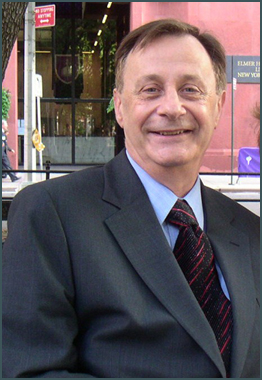
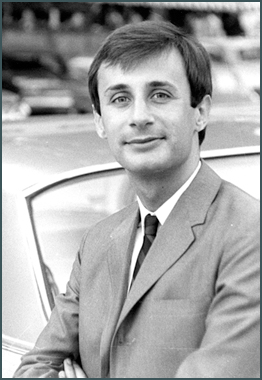
|